Choosing the Right Court Surface for Pickleball: A Deep Dive
There’s nothing quite like the sound of a pickleball paddle striking a ball, followed by the satisfying thwack as it hits the court. For me, pickleball isn’t just a game; it’s a passion, a community, and a fantastic way to stay active. Over my many years playing and organizing events, I’ve come to appreciate every detail that contributes to a great game, and perhaps none is more crucial than the court surface itself. The type of surface you play on can profoundly impact your game, your comfort, and even your long-term enjoyment. So, if you’re thinking about building a new court, converting an existing one, or just curious about what makes for the best pickleball court surface type, you’ve come to the right place.
I’ve played on just about every kind of surface you can imagine, from purpose-built facilities to repurposed tennis courts and even makeshift setups in gymnasiums. Each surface offers something different, affecting ball bounce, player movement, and even the wear and tear on your body. Understanding these differences is key to making a wise choice, whether for a home court or a community facility. Let’s talk about what makes a surface truly shine for pickleball.
Understanding the Basics of Pickleball Court Surfaces
Before we explore the options, it’s helpful to understand what we’re looking for in an ideal pickleball court. We want consistency in ball bounce, good traction for player safety, reasonable shock absorption to protect joints, and durability to withstand the elements and heavy play. Many factors play a part here, including the material composition, the presence of an acrylic top coat, and even the underlying base.
Why Surface Matters More Than You Think
Think about it: the court surface is the foundation of every rally. A sticky surface might cause you to stumble, while a slick one could lead to slips. A hard, unforgiving surface can send shockwaves through your knees and ankles, while one with a bit of give can feel much better after hours of play. I’ve certainly felt the difference. I once played on an old, cracked asphalt court that had lost most of its top coat, and every bounce was a surprise. The ball would often take unexpected hops, and my feet felt every single impact. It certainly wasn’t the best pickleball court surface type for consistency or player comfort.
Conversely, I remember playing at a new facility with a beautifully constructed acrylic court. The ball bounced true every time, my movements felt fluid and secure, and I could focus entirely on my shots and strategy without worrying about the court. This stark contrast solidified my belief that the surface is a silent partner in every game, either helping or hindering your performance and enjoyment.
The Contenders: Common Pickleball Court Surfaces
Let’s break down the most popular choices for pickleball courts, looking at their characteristics, benefits, and drawbacks from my own experience.
Acrylic Hard Courts – Often the Preferred Option
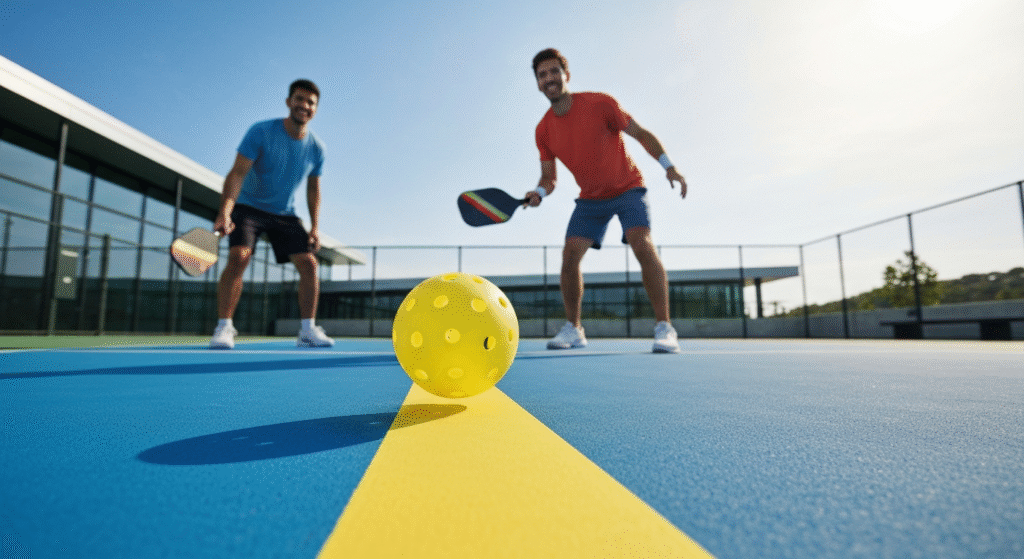
For many, acrylic hard courts represent the standard for pickleball. These courts typically have a concrete or asphalt base, covered with several layers of acrylic, often mixed with rubber for cushioning, and topped with a textured, colored finish. This is frequently what I consider the best pickleball court surface type for competitive play.
- Pros:
- Consistent Ball Bounce: The smooth, even surface ensures predictable bounces, which is vital for precise shots.
- Excellent Traction: The textured acrylic provides a good grip, allowing for quick changes in direction without slipping.
- Durability: These courts are built to last, resisting weather and heavy usage well.
- Customizable Cushioning: You can add more rubberized layers for increased shock absorption, making it easier on players’ joints. I personally prefer courts with a bit more cushion; my knees thank me later!
- Vibrant Colors: Acrylic courts come in a wide array of colors, which helps with visibility and aesthetics.
- Cons:
- Initial Cost: Installation can be a significant investment compared to simpler options.
- Professional Installation Needed: Laying an acrylic court requires specialized skills to ensure a perfect, even finish.
- Can Get Hot: Darker colors can absorb heat, making the surface very warm on sunny days.
My experience on acrylic courts has almost always been positive. The ball just feels right, and I feel confident pushing off for volleys or stretching for a dink. If resources allow, this is often where I’d recommend placing your money for a dedicated court.
Concrete Courts – The Foundation
A basic concrete slab, properly laid, can absolutely serve as a pickleball court. Many home courts begin as simply a concrete pad. However, “raw” concrete is rarely the best pickleball court surface type without some additions.
- Pros:
- Very Durable Base: Concrete is incredibly strong and long-lasting if poured correctly.
- Relatively Low Initial Cost (for the slab): Compared to full acrylic systems, just pouring concrete is less expensive.
- Good Ball Bounce (if smooth): A well-finished concrete slab can offer a consistent, if sometimes very lively, bounce.
- Cons:
- Hard on Joints: Without an acrylic topcoat, concrete is extremely unforgiving. I’ve felt the ache after playing on bare concrete for too long.
- Can Be Slippery: Untreated concrete can be quite slick, especially when wet or dusty.
- Cracking Potential: Concrete can crack over time due to ground movement or improper installation, creating uneven play areas.
- Needs Sealing/Painting: For better playability and appearance, concrete usually needs to be sealed and painted, which adds to the cost and complexity.
If you’re starting with a concrete base, I always advise applying an acrylic topcoat. It makes a world of difference for player comfort and safety. A plain concrete court might work for casual fun, but for serious play or regular use, it’s not ideal.
Asphalt Courts – Versatility and Accessibility
Like concrete, asphalt serves as a common base for many sports courts, including pickleball. Many existing tennis courts that get converted are built on asphalt. It’s often seen as a good middle-ground option.
- Pros:
- Lower Initial Cost than Concrete: Laying an asphalt base can sometimes be cheaper than pouring a concrete slab.
- Good Drainage: Asphalt is porous, which helps with water runoff, though it still needs proper grading.
- Flexible Base: It’s more forgiving to ground movement than concrete, which can reduce cracking.
- Cons:
- Requires Sealing and Coating: Bare asphalt is too rough and soft for optimal play; it needs an acrylic surface.
- Softer Base: While flexible, asphalt can be more susceptible to indentations from heavy objects or extreme heat.
- Can Degrade Over Time: Asphalt can soften in heat and become brittle in cold, requiring more frequent resurfacing than concrete bases.
Many of the courts I play on in public parks are asphalt-based with an acrylic topcoat. They generally play very well, offering good speed and bounce. The key here is the quality of the asphalt base and the application of the acrylic layers. A well-maintained asphalt court can certainly be a contender for the best pickleball court surface type, especially if you’re working with an existing tennis court.
Modular Tile Courts – Innovative Options
Modular tile systems are a newer, very flexible option gaining popularity, particularly for those looking for a portable or easily installable surface. These are interlocking plastic tiles that create a playing surface.
- Pros:
- Good Shock Absorption: The individual tiles often have some give, which is gentler on joints. I’ve found these to be quite comfortable to play on.
- Excellent Drainage: The open design allows water to quickly drain through, making courts playable soon after rain.
- Easy Installation: You can often install these yourself over an existing hard, flat surface like concrete or asphalt.
- Portable: They can be disassembled and moved, which is great for temporary setups or if you move homes.
- Low Maintenance: Individual damaged tiles can be easily replaced.
- Cons:
- Ball Bounce Can Be Different: The bounce tends to be a bit slower and higher compared to traditional hard courts. This takes some getting used to.
- Can Feel “Hollow”: The hollow design underneath can sometimes give a slightly different sound and feel when running.
- Cost: Quality modular tiles can be expensive per square foot.
- Not as Fast: If you prefer a very fast court, this might not be your ideal choice.
I’ve played on several modular tile courts, and they’re quite good, especially for community centers or private backyard courts where flexibility is a priority. The feel is distinct, but after a few games, you adjust. For those who prioritize joint health and quick drainage, this could be the best pickleball court surface type.
Indoor Gym Floors – Hardwood and Synthetics
For indoor play, schools and recreation centers often use existing gym floors, usually hardwood or specialized synthetic sports flooring.
- Pros:
- Excellent Shock Absorption (Hardwood): Sprung hardwood floors are very forgiving on the body, making them a joy to play on.
- Consistent Ball Bounce: Both hardwood and synthetic gym floors generally offer a very true and consistent bounce.
- Controlled Environment: No weather issues means consistent play year-round.
- Good Traction: Most gym floors are designed for athletic movement, providing good grip.
- Cons:
- Availability: Dedicated indoor pickleball courts are less common than outdoor ones; you’re often sharing space with basketball or volleyball.
- Hardwood Maintenance: Hardwood floors require careful maintenance, including regular cleaning and occasional refinishing.
- Cost: Building a new indoor hardwood court is very expensive.
- Slippery when Dusty: Both types of indoor courts can get slick if not cleaned regularly. I’ve definitely slid a bit on dusty gym floors before.
Playing indoors on a proper gym floor is a fantastic experience. The consistent bounce and easy movement are hard to beat. If I had the choice for year-round play without worrying about weather, an indoor gym floor would rank high on my list for the best pickleball court surface type.
Factors to Consider When Choosing Your best pickleball court surface type
With all these options, how do you make a choice? Here are the key things I always advise people to think about.
Budget and Installation Costs
This is often the first and most critical factor. Pouring a new concrete or asphalt base, then applying multiple layers of acrylic, can be a significant investment. Modular tiles have a higher upfront material cost but can be DIY installed, saving on labor. Refurbishing an existing surface is usually cheaper than building new. Get multiple quotes and understand what each quote includes.
Maintenance and Longevity
Some surfaces require more upkeep than others. Acrylic courts need occasional cleaning and resurfacing every few years to keep them looking and playing their best. Raw concrete or asphalt might need more frequent sealing or crack repairs. Modular tiles are easy to clean and replace parts, but might not last as long as a well-maintained hard court. Think about how much time and money you’re willing to dedicate to court care over its lifespan.
Playability and Player Comfort
How do you want the ball to bounce? How important is cushioning for your joints? If you play intensely or for long sessions, a more cushioned surface might be worth the extra expense. If you prefer a faster game, a less cushioned acrylic might be the choice. I know my body appreciates the softer landings on cushioned courts, especially after a long tournament day.
Climate and Environmental Factors
Where is your court located? If you’re in an area with extreme temperatures, freeze-thaw cycles, or heavy rainfall, certain materials will perform better. Asphalt can be more forgiving with ground movement from frost, while concrete needs proper expansion joints. Modular tiles excel in drainage. Consider sun exposure too; darker colors can get scorching hot.
Accessibility and Community Needs
Is this a private court or for a community? For public facilities, durability, low maintenance, and player safety for a wide range of skill levels become even more important. You might also want to think about accessibility for all players. If you’re building a court for a neighborhood, getting input from potential users is a really good idea.
My Personal Take on Finding the best pickleball court surface type
Having swung paddles on countless courts, I’ve developed some strong opinions. For a dedicated outdoor facility, especially one meant for regular, competitive play, my vote leans heavily towards an acrylic-coated concrete base with sufficient cushioning. It offers the perfect blend of consistent play, durability, and player comfort. I’ve seen these courts stand up to years of intense use, and they always provide a satisfying game.
If budget is a tighter constraint, or if I were converting an existing tennis court, an asphalt base with a quality acrylic overlay would be my next choice. I’ve played some fantastic games on these surfaces, and they can be incredibly good value. The key is ensuring the base is sound and the acrylic is applied well.
For a backyard court where portability or ease of installation is paramount, I’ve had great fun on modular tile courts. They’re quick to set up, easy on the joints, and very practical. While the bounce is a little different, it’s a small adjustment for the convenience they offer. I’ve used temporary modular courts for events, and they’ve always held up well and kept players happy.
And indoors? Nothing beats a good sprung hardwood gymnasium floor. The feeling of gliding across the court and the consistent bounce of the ball are just superb. Whenever I get to play on one, I know I’m in for a treat.
Beyond the Surface: Essential Gear and Tips
While the court surface is incredibly important, your gear also plays a role in how you experience the game on different types of courts.
- Footwear: This is absolutely critical. On hard acrylic courts, you need court shoes with good lateral support and durable outsoles. Running shoes are not suitable as they lack the necessary stability for quick side-to-side movements and can wear out quickly. For indoor gym floors, non-marking athletic shoes are a must. I always invest in good pickleball-specific court shoes; they save my ankles and knees.
- Pickleballs: Different balls perform slightly differently on various surfaces. Outdoor balls are generally harder and heavier to resist wind, leading to a livelier bounce on any surface. Indoor balls are lighter with larger holes, resulting in a softer, slower bounce, which can feel even slower on a cushioned surface. Make sure you’re using the right ball for your chosen court type for the best experience.
- Court Care: No matter the surface, regular cleaning helps keep it in top shape and safe for play. Sweeping away leaves and debris, and occasionally power washing acrylic surfaces, can prolong their life. For modular tiles, clearing debris from underneath them prevents buildup. I make it a point to help keep courts clean whenever I play; a clear court is a happy court!
Choosing the best pickleball court surface type is a decision that affects every aspect of your game. By weighing the costs, maintenance needs, play characteristics, and your personal preferences, you can create a court that brings joy and excitement for years to come. I hope my experiences and insights help you make the perfect choice for your next pickleball adventure!