
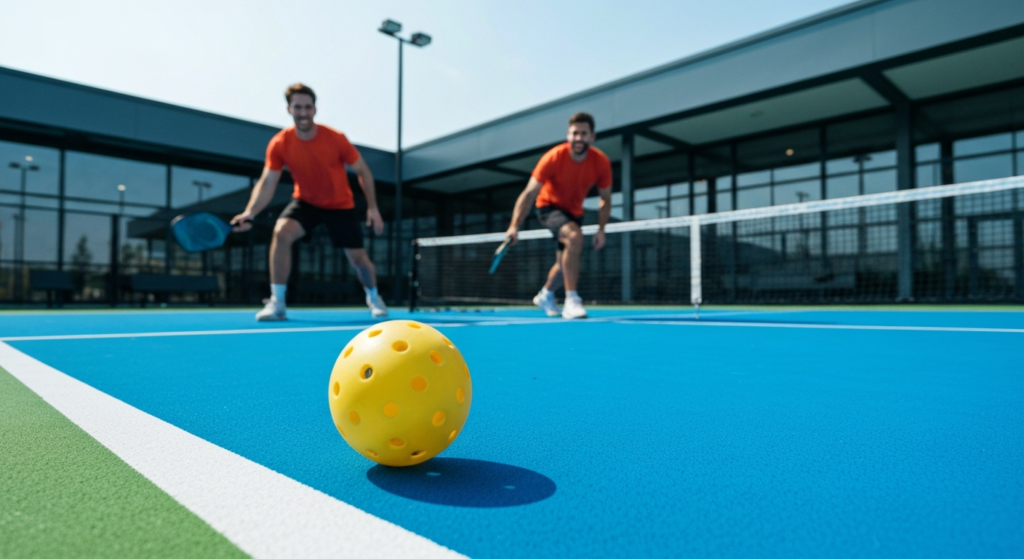
Finding Your Perfect Home Court Setup
I remember the first Saturday I decided to turn my driveway into a mini sports arena. The sun was shining, I had a fresh pack of balls, and my favorite paddle was ready to go. The only thing missing was a way to divide the court. For a few weeks, I used a piece of rope tied between two chairs. It worked, but it didn’t feel like the game I loved. That was when I started my search for the best backyard pickleball net. I wanted something that felt sturdy, stayed tight, and could survive a little wind without falling over every five minutes.
Setting up a court at home changes the way you play. You no longer have to wake up at six in the morning to grab a spot at the local park. You don’t have to deal with long wait times or crowded sidelines. When you have the best backyard pickleball net right outside your door, you can practice your dinks and serves whenever the mood strikes. I found that my game improved much faster once I could step outside for twenty minutes of practice after work. It becomes a part of your daily life rather than a scheduled event.
I want to share what I learned during my search. There are so many options out there, and they all look similar in pictures. But once you start putting them together and playing with them, you notice the little things that matter. Some are heavy and hard to move, while others are so light they blow away. I have spent a lot of time testing these out so you can skip the trial and error and get straight to playing.
What Makes a Net Great for Home Use
When I look for the best backyard pickleball net, I prioritize three things: stability, ease of assembly, and net tension. If a net sags in the middle, it changes the height of the game. A legal net should be 34 inches high at the center. If yours is drooping to 32 inches, you are training your brain to hit shots that won’t clear the net in a real tournament. I always carry a small measuring tape in my bag to check this. A good home system needs a strong center strap to keep that height consistent.
Stability is another big factor. Most backyards or driveways aren’t perfectly flat. I look for nets with wide feet that can grip the ground. If you live in a place with a lot of wind, like I do, you need a frame with some weight to it. I once bought a very cheap, light net that ended up in my neighbor’s bushes after a light breeze. It was embarrassing to go over and ask for my net back. Now, I stick to frames made of powder-coated steel or high-quality carbon fiber. These materials stay put and don’t rust after the first rain storm.
I also think about how long it takes to put the net together. If it takes me twenty minutes to set everything up, I am less likely to go out and play. I want a system that I can snap together in five minutes or less. The best backyard pickleball net systems usually have color-coded pipes or push-button locking mechanisms. These features make it easy to assemble without needing any tools. I love being able to grab the bag, head to the driveway, and be ready to serve before my coffee gets cold.
The SwiftNet 2.1: My Top Choice for Performance
If you want the absolute best backyard pickleball net and you are willing to spend a bit more, the SwiftNet 2.1 is hard to beat. I bought one of these last year and it changed my mind about portable systems. Most nets use a lot of heavy steel pipes. The SwiftNet uses recycled carbon fiber. This makes it incredibly light. I can carry the entire bag with one finger. But because of the way it is designed, it is also very strong.
What I love most about this net is the tension. It doesn’t use a traditional mesh net that hangs loosely. It uses a high-tension cord that pulls the net tight across the top. When a ball hits the top of this net, it reacts just like a permanent net on a pro court. It doesn’t just flop over; it has that crisp bounce. I found that my practice sessions felt much more authentic with this setup. It also only has a few parts, so I can set it up in about two minutes. It is a smart design that solves many of the problems I had with older models.
The Onix Recruit: Great for Beginners
Not everyone needs a professional-grade setup right away. When my sister started playing, I recommended she look at the Onix Recruit. It is often cited as a best backyard pickleball net for people who are just testing the waters. It is smaller than a regulation net, which actually makes it great for tight driveways or small patio spaces. It is very affordable and comes with everything you need to start hitting right away.
I spent an afternoon playing on her Recruit net, and I was impressed by how simple it was. The poles are thinner than the high-end models, but they hold up well for casual play. It is perfect if you have kids who want to join in. Since it is a bit shorter in width, it fits in areas where a full 22-foot net won’t go. If you are worried about space, this is a choice you should consider. It gets you moving without needing a massive amount of room.
A11N Portable Net: The Best Middle Ground
For most players, the A11N Portable Net hits the sweet spot. It is a full-sized, regulation net that feels very sturdy. I have used this one at many local meetups. The steel frame is thick and the paint job keeps it from scratching easily. It features a wide base that handles wind better than the budget options. When I help friends set up their first home courts, this is usually the one I point them toward as the best backyard pickleball net for the money.
The net itself is made of a thick nylon that doesn’t tangle easily. I hate it when you pull a net out of a bag and it is a giant knot. This one stays organized. The center support is a metal rod rather than just a strap, which helps it maintain that perfect 34-inch height. I have left this net out in my driveway for a week at a time during the summer, and it didn’t fade or lose its shape. It is a workhorse that can handle a lot of use.
The Falcon Portable Net: Built Like a Tank
If you have a group of friends who play hard and hit fast, you might want something even more durable. The Falcon net is often mentioned when talking about the best backyard pickleball net for heavy-duty use. It has wheels on the bottom of the frame. This is a game-changer if you have a large flat area and want to move the net out of the way to park your car. You just unlock the wheels and roll it to the side of the garage.
I find that nets with wheels are usually much heavier, which is good for stability. You don’t have to worry about the frame twisting or bending if someone accidentally runs into it. The locking casters are strong and keep the net from rolling away while you play. I noticed that the netting on the Falcon is also a bit thicker than average. It feels like it could last for years even with daily sun exposure. If you don’t plan on traveling with your net often and just want a “permanent” feel for your driveway, this is the way to go.
How to Care for Your Backyard Net
Once you pick the best backyard pickleball net for your space, you want to make sure it lasts. I have made the mistake of leaving my net out through a rainy winter, and I regretted it. Even the best powder-coated steel can eventually show signs of wear if it sits in a puddle for months. Now, I make it a point to put my net back in its carrying bag if I know I won’t be playing for a few days. It only takes a few minutes and it keeps the mesh from getting brittle.
Another tip I can give you is to check the tension straps regularly. Over time, the Velcro or buckles can loosen. I check mine every time I start a game. A sagging net ruins the fun. If your net has a center post, make sure it is sitting straight. I sometimes use a little bit of lubricant on the push-buttons of the frame if they start to get sticky from the dust and dirt outside. Keeping the parts moving easily makes assembly much more pleasant.
Setting Up Your Backyard Court
Having the best backyard pickleball net is only half the battle. You also need to think about the surface you are playing on. I spent a whole morning cleaning my driveway before I set up my net for the first time. I used a power washer to get rid of the loose gravel and dirt. Playing on a clean surface is much safer and helps your shoes grip better. If you have cracks in your concrete, you can buy some patch filler at a local store to smooth them out.
For lines, I started with sidewalk chalk. It was great because I could change the size if I needed to. But the chalk wiped away every time it rained. I eventually moved to blue painter’s tape, which worked well for a while. If you are serious about your home court, you can buy specialized court tape or even paint the lines. Just make sure you measure twice! A standard pickleball court is 20 feet wide and 44 feet long. Even if you don’t have that much room, you can still have a lot of fun with a “kitchen-only” practice court.
Final Thoughts on Home Play
I can honestly say that buying the best backyard pickleball net was one of the best decisions I made for my health and social life. It turned my home into a place where friends and family want to hang out. We have hosted small round-robin tournaments on my driveway that ended with a backyard barbecue. It brings people together in a way that is hard to describe. You get to enjoy the fresh air, get some exercise, and laugh a lot.
Don’t worry too much about having a perfect professional setup. The goal is to get out there and hit the ball. Whether you choose a high-end carbon fiber net or a sturdy steel one with wheels, the important part is that you are playing. I hope my experiences help you find the right gear for your needs. Every time I hear that “pop” of the ball against the paddle in my own backyard, I smile because I know I don’t have to drive anywhere to enjoy my favorite sport. Grab a net, mark some lines, and start playing!