
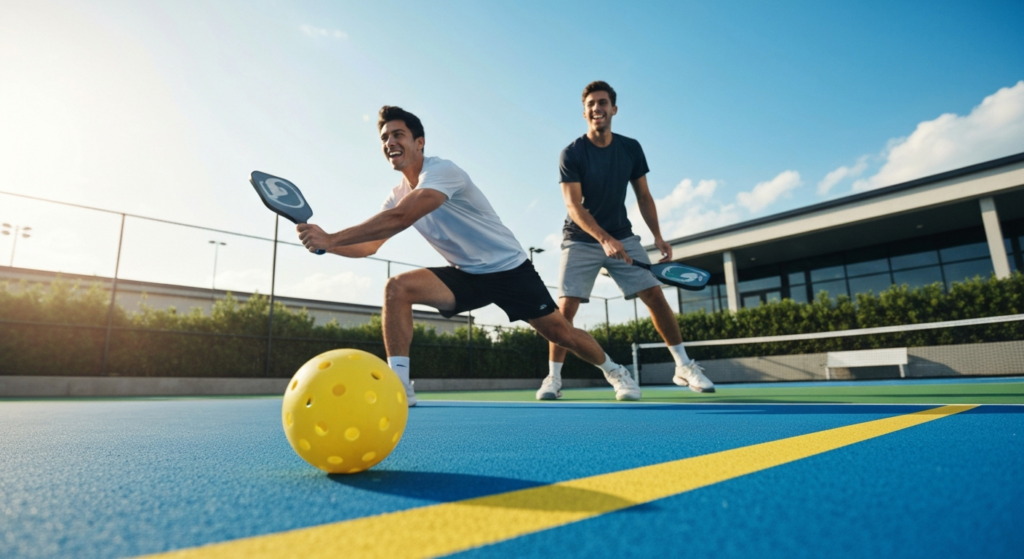
The Importance of Wrist Health in Our Sport
I still remember the first time I felt that sharp twinge in my forearm after a long Saturday of games. I had spent four hours chasing lobs and hitting hard overheads, feeling like I was on top of my game. But the next morning, I could barely hold my coffee mug. It was a wake-up call. I realized that while I was focusing on my footwork and my serves, I was completely ignoring the smallest yet most active joint in my body: my wrist. Since that day, I have never stepped onto the court without a proper pickleball wrist warm up. It has changed how I play and, more importantly, how I feel after the matches are over.
The wrist is the unsung hero of the pickleball court. It provides the flick for a deceptive dink, the power for a snap overhead, and the stability for a firm volley. Because our sport involves a lot of rapid, repetitive motions, these small tendons and muscles take a lot of heat. If you jump straight into a competitive game without prep, you are asking those tissues to go from zero to sixty instantly. I have seen so many friends deal with tendonitis and “pickleball elbow” simply because they skipped the five minutes it takes to get the blood flowing. Taking the time for a pickleball wrist warm up is not just about avoiding pain; it is about playing better for a longer period of time.
My Go-To Routine for a Proper Pickleball Wrist Warm Up
When I arrive at the courts, I usually see people stretching their hamstrings or swinging their arms, but their hands are often forgotten. I like to start my pickleball wrist warm up while I am still putting on my court shoes. It does not require any special space, and you can do it anywhere. The goal is to increase the temperature of the muscles and get the synovial fluid moving in the joint. This fluid acts like oil in an engine, making everything glide without friction.
Slow and Steady Wrist Circles
I start with simple circles. I make a soft fist with both hands and rotate them in a circular motion. I do ten circles clockwise and then ten circles counter-clockwise. The key here is to move slowly. I try to make the circles as large as possible, feeling the stretch at every corner of the rotation. I often hear a few pops or cracks, which is normal for me, but I never push into pain. If I feel a pinch, I shrink the circle. I find that doing this for about a minute really helps me feel more connected to my paddle later on.
The “Wave” Motion
This is a movement I picked up from a physical therapist friend. I interlace my fingers together and keep my elbows tucked near my ribs. Then, I move my hands in a wave-like pattern, rolling the wrists up and down. This gets both wrists moving in sync and stretches the lateral parts of the joint. I do this for about thirty seconds. It feels a bit silly at first, but I noticed it helps me with my backhand flick shots because it loosens up the side-to-side mobility that we use so much in the kitchen.
Active Stretching Before the First Serve
After I have done the basic rotations, I move into active stretching. There is a big difference between holding a stretch for a long time (static) and moving through a stretch (active). Before a game, I prefer the active version. It keeps my heart rate up and prepares my nervous system for the fast-paced nature of the sport. A good pickleball wrist warm up should feel like you are waking the body up, not putting it to sleep.
Flexion and Extension Pulses
I hold my right arm straight out in front of me with my palm facing away, like I am telling someone to stop. With my left hand, I gently pull my fingers back toward my body. Instead of holding it, I pulse it. I pull back for a second, release, and repeat ten times. Then, I point my fingers toward the ground with my palm facing me and pulse again. This targets the extensors and flexors in the forearm. I do this on both sides. I have found that this particular move helps prevent that tightness that leads to “tennis elbow” symptoms.
The Prayer Stretch and Reverse Prayer
I stand with my palms together in front of my chest, fingers pointing up. I slowly lower my hands toward my waist while keeping my palms pressed together. I only go as far as I can without my palms lifting apart. I hold for two seconds and come back up. Then, I flip my hands so the backs of my hands are touching and my fingers point down, and I lift my elbows slightly. This reverse stretch is excellent for the top of the wrist. I do five reps of each. I feel a deep stretch along the forearm, which is exactly where most of our paddle power comes from.
Why Gear Matters for Wrist Health
Over the years, I have learned that a pickleball wrist warm up is only part of the puzzle. The gear you use can either help or hurt your wrists. When I first started, I used a paddle that was way too heavy for me. I thought more weight meant more power, but all it did was strain my wrist every time I tried to react quickly at the net. I eventually switched to a mid-weight paddle, and the difference was night and day. My wrist felt less fatigued after games, and I could play three days in a row without issues.
Another thing I changed was my grip size. If your grip is too small, you have to squeeze the paddle much harder to keep it from twisting in your hand. That constant squeezing creates a lot of tension in the wrist. I added an overgrip to my paddle to make it fit my hand better. Now, I can hold the paddle with a “lightness” that allows my wrist to be fluid. If you feel like you are death-gripping your paddle, you might want to look at your grip size. A relaxed hand is a fast hand, and it all starts with having the right equipment in your bag.
- Choose the right weight: If you have wrist issues, look for a paddle between 7.4 and 7.9 ounces.
- Check your grip: Make sure there is enough space between your fingertips and your palm when you hold the handle.
- Use overgrips: They are cheap and help you maintain a secure hold without squeezing too hard.
- Consider compression: I sometimes wear a light wrist sleeve if I am playing a long tournament to keep the joint warm.
Transitioning to the Court
Once my hands feel warm and my gear is ready, I don’t just start smashing the ball. I treat my first few minutes of dinking as the final phase of my pickleball wrist warm up. I stand at the kitchen line with a partner and focus on very soft, controlled shots. I try to use my wrist to “lift” the ball over the net rather than using my whole arm. This helps me find my “touch.”
I spend about five minutes just dinking straight ahead and then cross-court. During this time, I am checking in with my body. Does my wrist feel stiff? Do I need to do a few more circles? If I feel any lingering tightness, I will stop and do a quick stretch between dinking sets. This transition period is vital because it moves the warm up from general movement to sport-related movement. By the time we start the first game, my wrists are loose, my grip is relaxed, and I am ready to react to those fast volleys.
What to Do if You Feel Pain
I have learned the hard way that “playing through the pain” is usually a bad idea in pickleball. If I feel a sharp pain during my pickleball wrist warm up, I take it as a sign to slow down. Sometimes it just means I need more time to get the blood flowing. Other times, it might mean I need a day off. I used to be stubborn about this, but after a wrist strain kept me off the courts for three weeks last year, I became much smarter.
If you experience persistent soreness, I recommend looking into some strengthening exercises. I use a simple squeeze ball or a grip strengthener while I am watching TV. Building the muscles around the wrist gives the joint more support. Also, icing after a heavy day of play can help keep inflammation down. I keep a small reusable ice pack in my freezer specifically for my paddle hand. It feels amazing after a hot day on the asphalt courts and helps me recover faster for the next session.
- Listen to your body: A dull ache might just need more warm up, but sharp pain needs rest.
- Strengthen your grip: Use a stress ball or spring trainer a few times a week.
- Ice after play: This helps reduce the natural swelling that happens after repetitive use.
- Check your technique: Sometimes wrist pain comes from “flicking” too hard instead of using a smooth arm motion.
Final Thoughts on Staying Court-Ready
Playing pickleball is one of the joys of my life. The social aspect, the exercise, and the thrill of a good rally keep me coming back. But I know that to keep playing into my later years, I have to take care of the small details. A pickleball wrist warm up takes almost no time, but the benefits are huge. It keeps you on the court and out of the doctor’s office. Plus, you will find that your shots are more accurate when your muscles are ready to perform.
I encourage you to try these stretches the next time you head out to play. Make it a habit, just like checking your paddle or grabbing your water bottle. You might be surprised at how much better your hands feel after a couple of hours of play. Your wrists do a lot of work for you out there, so give them a little love before the first serve. See you on the courts, and keep those dinks soft and those wrists warm!