
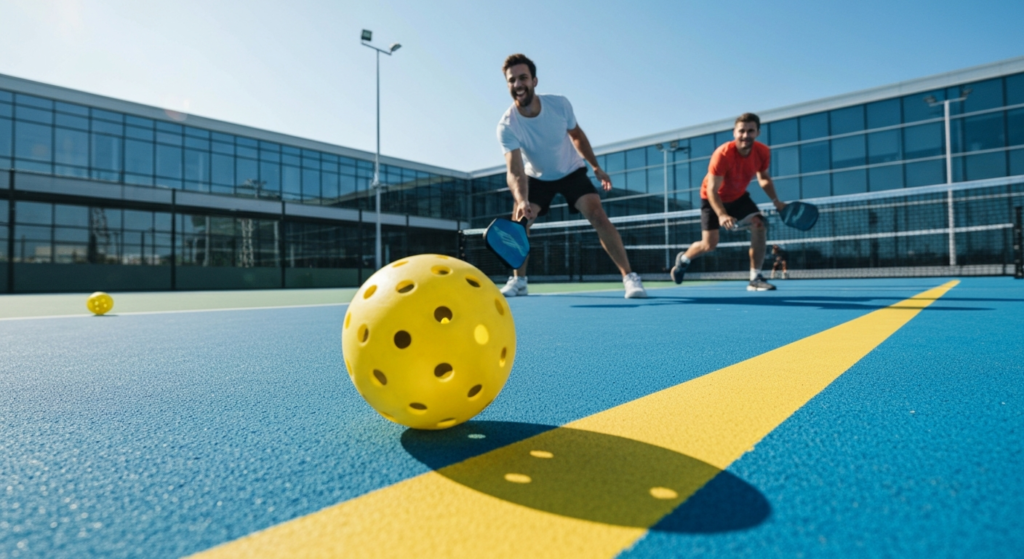
Getting Started with Pickleball on a Tennis Court
I remember the first time I picked up a paddle. I was hooked instantly, but I ran into a big problem: there were no dedicated courts in my neighborhood. All I had nearby were a couple of old tennis courts that mostly sat empty. I knew I had to find a way to play, and that is when I began looking into pickleball on tennis court conversion tips to make my local court work for my new obsession. If you find yourself in the same boat, you are in the right place. Converting a tennis space into a pickleball arena is a fantastic way to grow the game and get more play time without needing to wait for a city budget to build new facilities.
The beauty of this conversion is that tennis courts are massive compared to what we need for pickleball. A standard tennis court measures 60 by 120 feet, while a pickleball court is only 20 by 44 feet. This means you can actually fit up to four pickleball courts on a single tennis court if you arrange them correctly. I usually suggest starting with just one or two to keep things simple, but the potential for a huge pickleball party is always there. When I first tried this, I was worried about the lines being confusing, but I found that with a few tricks, it becomes second nature very quickly.
One of the best pickleball on tennis court conversion tips I can offer is to understand the geometry before you even step onto the pavement. You want to make sure you have enough “overrun” space. This is the area behind the baseline and on the sides where you run to get those deep lobs or wide angled shots. If you cram the courts too close together, you might end up bumping into your friends or the fence. I always aim for at least 10 feet of space behind the baseline and 5 feet on each side whenever possible.
Marking Your Lines the Right Way
Once you have the space figured out, you need to mark the lines. This is where many people get stuck. If you are playing on a public court, you probably cannot paint permanent lines. I have spent many hours testing different ways to mark a court that won’t get me in trouble with the local park department. Blue painters tape is a popular choice because it is easy to see and pulls up without leaving a sticky mess. I recommend getting the 2-inch wide tape because it matches the standard width of professional lines.
If you want something even faster, chalk is a great option. I keep a bucket of sidewalk chalk in my bag at all times. It is not as precise as tape, but it gets the job done for a quick afternoon session. Just keep in mind that if it rains, your court disappears. For a more “pro” feel without the paint, you can buy weighted rubber court markers. These are L-shaped and T-shaped pieces that you just lay on the corners. They are great because they don’t move around much and you can set them up in less than five minutes. Here is a quick list of what I use for marking:
- Blue Painters Tape: Great for visibility and clean removal.
- Chalk: Best for quick, temporary games on a dry day.
- Rubber Corner Markers: Perfect for a reusable setup that requires no cleanup.
- Measuring Tape: You need at least a 50-foot tape to get the kitchen and baselines right.
When you are laying out the lines, start with the “kitchen” or the non-volley zone. This is the most vital part of the court. It should be 7 feet from the net on both sides. I always double-check this measurement because if the kitchen is too small, the game changes completely. After the kitchen, measure out 15 feet to the baseline. Then, mark your sidelines 20 feet apart. I find that having a friend help hold the other end of the measuring tape makes this go much faster. Plus, it is a good way to get your hitting partner involved in the setup process.
Adjusting the Net Height
The net is another big difference between the two sports. A tennis net is 42 inches high at the posts and 36 inches in the center. A pickleball net should be 36 inches at the posts and 34 inches in the center. This might seem like a small change, but those two inches in the middle make a massive difference for your third-shot drops and dinks. One of my favorite pickleball on tennis court conversion tips involves the center strap of the tennis net. Most tennis nets have a strap in the middle that connects to an anchor in the ground. You can often pull this strap tighter to lower the net to the 34-inch height we need.
If the tennis net is too stiff or won’t go low enough, I suggest buying a portable pickleball net. These are lightweight, usually come in a carrying bag, and can be set up right over the existing tennis court. I keep one in my trunk just in case. When using a portable net, I usually set it up sideways on one half of the tennis court. This way, the big tennis net acts as a backstop or a divider between two different pickleball games. It is a very efficient use of the area.
- Measure the center of the net with a tape measure.
- Tighten the center strap until the top of the net is 34 inches from the ground.
- Check the height near the sidelines to see if it is close to 36 inches.
- If you can’t adjust the net, set up a portable net on either side of the tennis net.
I have found that playing with a net that is too high builds bad habits. You start hitting the ball too high over the net, which leads to getting “smashed” by your opponents. Taking the time to get the net height right will help your game stay consistent when you eventually play on real, dedicated courts. It is worth the extra two minutes of effort at the start of your session.
Choosing the Right Gear for Tennis Surfaces
Tennis courts are usually made of hard acrylic or asphalt with a gritty texture. This surface is perfect for pickleball, but it can be tough on your gear. I have noticed that my balls wear out much faster on these courts than they do on indoor wooden floors. When you are playing on a converted tennis court, you want to use outdoor balls. Outdoor balls like the Franklin X-40 or the Onix Pure 2 are made of harder plastic and have smaller holes. They are designed to withstand the wind and the rough surface of the court.
Your shoes also matter a lot. Since you are playing on a tennis surface, tennis shoes are actually the best choice. They are built for lateral movement and have durable soles that won’t wear down after a few games. I used to try playing in regular running shoes, but I nearly twisted my ankle because they didn’t have enough side support. Proper court shoes will keep you safe and help you move more effectively during those intense dink rallies. I always tell my friends that if they want to spend money on one thing, it should be good shoes.
Paddles are less affected by the surface, but I do recommend a paddle with a good edge guard. When you are playing on a converted court, you might find yourself digging for low balls near the gritty surface. An edge guard protects the face of your paddle from chipping when it hits the ground. I have a favorite carbon fiber paddle that I use for almost every game, and the edge guard has saved it more times than I can count. Keeping your gear in good shape is a big part of enjoying the game long-term.
Managing the Bounce and the Environment
One thing I noticed when I started using pickleball on tennis court conversion tips was how the ball reacted differently. Tennis courts are often built with a slight slope for drainage. This can cause the ball to bounce a little strangely if you are used to perfectly flat indoor courts. I learned to watch the ball all the way to my paddle to adjust for these little variations. Also, because tennis courts are so large, the wind can be a factor. Since there is more open space around you, a gust of wind can carry your ball out of bounds more easily.
I like to play during the “golden hour” in the late afternoon. The sun is lower, which can be a pain if it is in your eyes, but the wind often dies down. If you are playing on a converted court that still has the high tennis fences, you are in luck. Those fences act as great windbreaks. I always try to set up my temporary court in the corner of the tennis area where the fences provide the most protection. This keeps the game fair and prevents the ball from flying into the next zip code every time I try to hit a deep serve.
Another tip is to be mindful of the extra lines on the court. It can be confusing to see the tennis service lines and the pickleball lines at the same time. I tell people to focus only on the color of the tape or chalk they put down. After about ten minutes of play, your brain starts to ignore the tennis lines. I found that using a bright, contrasting color like orange or neon green for my temporary lines helped my eyes stay locked on the right boundaries. It is all about training your brain to see the smaller court within the larger one.
Etiquette and Sharing the Space
Sharing is a huge part of the pickleball community. Since many of us are “borrowing” tennis space, it is vital to be respectful of the tennis players. I always make sure to check if the court is reserved for tennis before I start taping down lines. If a tennis player shows up and they have a permit, I gracefully pack up and find another spot. Being a good ambassador for pickleball helps prevent friction between the two groups. I have even invited tennis players to try a few points with my spare paddles. Many of them end up loving it!
When you are finished with your game, always clean up. If you used tape, peel it all up and throw it away. If you used chalk and the park rules are strict, you might even want to splash some water on the lines to clear them off. I make it a point to leave the court cleaner than I found it. This ensures that the park staff stays happy and keeps the courts open for everyone. A little bit of kindness goes a long way in making sure we have places to play. Here are a few etiquette points I follow:
- Ask Before You Tape: If there are people nearby, let them know you are setting up a temporary game.
- Keep Noise in Check: Pickleball is louder than tennis. Be aware of homes or other players nearby.
- Clear the Way: If your ball rolls onto an active tennis court, wait for their point to end before asking for it back.
- Leave No Trace: Remove all tape, markers, and trash when you are done.
I have found that most people are curious about the sport. By being friendly and organized, you can often turn a “tennis-only” area into a multi-sport hub where everyone feels welcome. It is how I managed to get my local park to eventually paint permanent pickleball lines on one of the courts. It started with me and a roll of tape, and it grew into a community of forty players.
Why Conversion is the Future of the Sport
I truly believe that using pickleball on tennis court conversion tips is the fastest way to get more people playing. Building new courts from scratch takes a lot of time and money. But there are thousands of underused tennis courts all over the country. By learning how to set up a game on these surfaces, we can play whenever and wherever we want. I have set up courts in parking lots, on driveways, and even on old basketball courts, but tennis courts are by far the best because the surface is already designed for ball games.
The social aspect of having four pickleball courts on one tennis court is amazing. You go from having two or four people playing tennis to having sixteen people playing pickleball in the same amount of space. The energy is higher, the laughter is louder, and you get to meet so many more people. I have made some of my best friends while waiting between games on a converted court. It turns a workout into a social event, and that is what makes this sport so special to me.
Every time I roll out my measuring tape, I feel a sense of excitement. I know that in a few minutes, a plain slab of asphalt is going to become a place where people compete, sweat, and have a blast. If you are hesitant to try it, just grab a roll of tape and a friend and go for it. You don’t need a perfect facility to have a perfect game. You just need a flat surface and the right mindset. The more we use these spaces, the more the sport will grow, and eventually, we might see even more dedicated courts popping up everywhere.
I hope these ideas help you get out there and start playing. Don’t let the lack of a “real” court stop you. With a little bit of prep and the right gear, any tennis court can become your new favorite pickleball spot. I will see you out there on the court!