
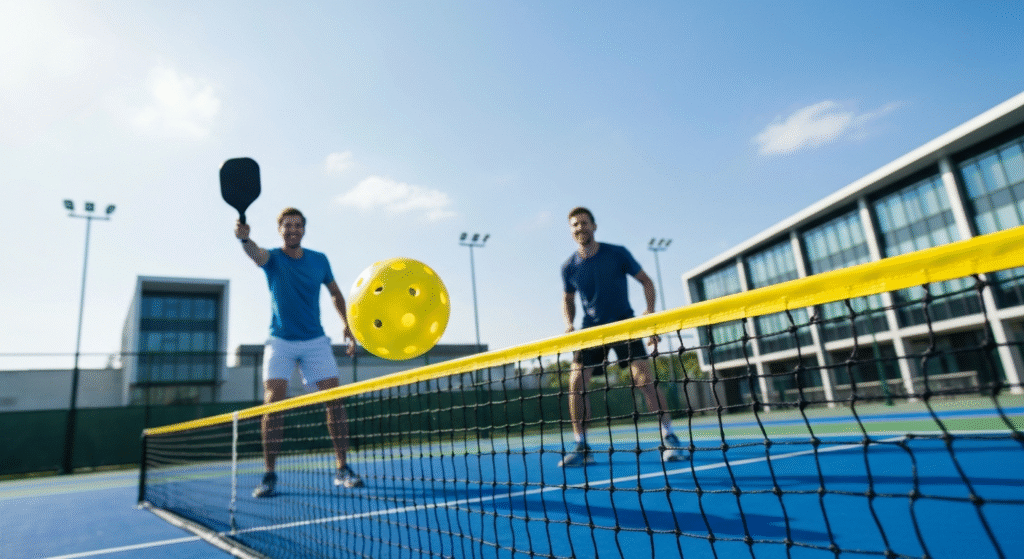
Unlocking Power: Pickleball Serve Speed Drills That Make a Difference
There’s a moment in every pickleball game when a truly powerful serve lands, catches an opponent off guard, and sets the tone for the point. It’s a fantastic feeling to hit a serve that feels strong and makes your opponent rush. I’ve always been fascinated by how much a good serve can change the game. It’s not just about getting the ball over the net; it’s about dictating play, putting pressure on, and sometimes even winning the point outright. If you’ve ever wished your serves had a bit more zing, a bit more oomph, then you’re in the right place. We’re going to explore some fantastic pickleball serve speed drills that I’ve used myself and seen others benefit from immensely. These aren’t just theoretical exercises; these are practical, court-tested methods to help you put more pace on your serves and become a more formidable player.
Why A Faster Serve Is A Game Changer
When I first started playing pickleball, my serve was mostly just a way to start the point. It was consistent, but it lacked any real threat. As I played more competitive matches, I quickly realized that an opponent with a strong serve could really put me on the defensive. A fast serve forces your opponent to react quickly, often giving them less time to set up their return. This can lead to weaker returns, pop-ups, or even errors, all of which give you and your partner an advantage right from the start. A good serve can open up the court, create immediate opportunities at the net, and even be an intimidation factor. It’s one of those skills that, once improved, can really make you feel like you’ve leveled up your game. It certainly did for me. I recall one game where my improved serve helped us win several points directly, just from unreturnable serves or weak returns that led to easy putaways.
The Core Components of a Power Serve
Before jumping into pickleball serve speed drills, it’s helpful to understand what makes a serve fast. It’s not just brute strength; it’s a combination of technique, timing, and body mechanics. I’ve spent countless hours dissecting my own serve and watching pros, and here’s what I’ve found to be crucial:
- Grip: A continental grip (holding the paddle like you’re shaking hands) is generally recommended for power. It allows for more wrist snap and control. I remember struggling with this early on, but once I committed to it, my serve felt much more natural.
- Toss: A consistent, controlled toss is paramount. For a strong serve, I find a slightly higher toss, allowing the ball to descend into the contact zone, helps generate more paddle speed. Too low or too inconsistent, and you’ll struggle.
- Contact Point: Hitting the ball out in front of your body, with your arm extended, allows you to transfer maximum energy. Think about meeting the ball at its highest point or just as it starts to drop, depending on your preferred serve style.
- Body Rotation: Your entire body should be involved. Rotating your hips and shoulders through the swing adds significant power. It’s like unwinding a spring.
- Follow-Through: Don’t stop your swing right after contact. A full, natural follow-through ensures you’ve put all your momentum into the ball. I often aim my paddle towards my non-hitting shoulder after contact.
Essential Gear for Developing Serve Speed
While technique is king, the right gear can certainly support your efforts in these pickleball serve speed drills. I’m not saying you need the most expensive paddle, but understanding how gear plays a role is helpful.
- Paddle Weight: Heavier paddles generally offer more power, but they can be harder to swing quickly and may cause arm fatigue. Lighter paddles allow for quicker swing speeds but require more effort to generate power. I personally prefer a mid-weight paddle, around 8.0-8.4 ounces, as it gives me a good balance of power and maneuverability.
- Paddle Surface: Raw carbon fiber or textured fiberglass surfaces can enhance spin, which, when combined with speed, makes for a very tricky serve.
- Balls: Using fresh, consistent pickleballs is important for practice. Worn-out balls can fly inconsistently, making your drills less effective. I always make sure to have a bag of new Franklin X-40s or Dura Fast 40s for my serve practice.
- Comfortable Apparel: This might seem minor, but if you’re uncomfortable or restricted, your swing won’t be as fluid. I always opt for breathable, movement-friendly athletic wear.
My Favorite Pickleball Serve Speed Drills
Now, let’s get to the good stuff – the actual pickleball serve speed drills that have helped me and many of my friends add pace to our serves. Remember, consistency and proper technique are key before you try to just whack the ball harder. Focus on form first, then layer on the speed.
Drill 1: The “Snap” Focus Drill
This drill specifically targets wrist snap and paddle head speed, which are crucial for a powerful serve. I really like this one because it isolates a key part of the swing.
- Setup: Stand at the baseline, without a ball initially.
- Execution: Focus purely on the motion of your serving arm. Practice your toss, then bring your paddle back, and as you come forward, exaggerate the wrist snap at the contact point. You should hear a distinct “whoosh” sound as your paddle slices through the air.
- Progression: Once you feel comfortable with the “whoosh,” add a ball. Serve normally, but consciously try to feel that intense wrist snap and paddle acceleration through contact. Don’t worry about accuracy at first; just focus on the feeling of speed.
- My Tip: I often imagine I’m trying to whip a towel. That mental image helps me get the right feeling for the snap. Do 3 sets of 10 serves, concentrating solely on that snap.
Drill 2: Deep Court Target Practice
This drill combines speed with placement. A fast serve is great, but if it’s out, it’s worthless. This is one of the classic pickleball serve speed drills that helps you control your power.
- Setup: Place cones or targets in the deep corners of the service box on the opposite side.
- Execution: Serve with maximum controlled speed, aiming for these deep targets. The goal is to hit the ball with power while keeping it in. If you hit a target, great! If it’s a fast serve that lands in the deep corners, even better.
- Progression: Start with wider targets, then gradually make them smaller as your accuracy improves. Try to hit 5 successful serves to each target before moving on.
- My Tip: I find it helpful to visualize a laser beam coming from my paddle towards the target. This helps me focus on both power and precision.
Drill 3: Full Body Rotation Power Serve
Remember how I mentioned full body rotation? This drill emphasizes just that.
- Setup: Stand at the baseline with your body slightly sideways to the net, ready to rotate.
- Execution: As you toss the ball, initiate your swing by rotating your hips and shoulders towards the net. Feel your entire body uncoil, driving energy into the paddle. The power should feel like it’s coming from your core, not just your arm.
- Progression: Start slowly, feeling the rotation. Gradually increase the speed of your rotation and swing.
- My Tip: I sometimes practice this without a paddle first, just feeling the body turn and arm swing. It helps ingrain the motion. Try to do 20 serves focusing on a full body turn each time.
Drill 4: Weighted Paddle Swings (Use with Caution!)
This drill is for building strength and swing speed, but it requires careful use to avoid injury. I only do this occasionally and always warm up thoroughly.
- Setup: Use a paddle with a light wrist weight attached (or a designated weighted training paddle). Do NOT use excessive weight.
- Execution: Perform shadow swings (without a ball) focusing on maximal swing speed. Feel the resistance of the weight building strength in your serving muscles.
- Progression: After a few sets of shadow swings, switch back to your regular paddle. You should feel your regular paddle feel lighter and your swing quicker.
- My Tip: I limit this drill to 5-10 swings per set, doing 2-3 sets, and always follow up with regular paddle swings to maintain proper muscle memory. Never try to hit a ball with a heavily weighted paddle.
Drill 5: Serve & Move Drill
A fast serve isn’t just about speed off the paddle; it’s about speed into position afterward. This drill combines your powerful serve with court movement.
- Setup: Stand at the baseline.
- Execution: Hit your fastest, most accurate serve. The moment the ball leaves your paddle, sprint directly to the non-volley zone line, getting ready for the return.
- Progression: Try to get to the non-volley zone line before your opponent’s return bounces. This teaches you to serve powerfully and then immediately transition into an aggressive net position.
- My Tip: I often visualize where I want to be at the net while I’m serving. It’s not just about the serve, but the whole sequence. Do 15-20 of these, focusing on the quick transition.
Beyond the Drills: Complementary Training for Speed
While the pickleball serve speed drills are fantastic, true speed improvement also comes from supporting physical development. I’ve found these areas to be incredibly beneficial:
Strength and Conditioning
A strong core, shoulders, and legs will contribute to overall power. I’ve incorporated simple exercises like planks, push-ups, shoulder rotations with light weights, and lunges into my routine. These don’t need to be intense gym sessions; even 15 minutes a few times a week can make a difference. The more stable and strong your body is, the more power you can generate safely.
Flexibility and Mobility
A wider range of motion allows for a longer, more fluid swing, which directly translates to speed. Stretching before and after play, focusing on shoulders, back, and hips, has been a game-changer for me. Yoga or even simple dynamic stretches can really open up your body and prevent injuries, allowing you to swing freely and powerfully without restriction.
The Mental Game
Confidence plays a huge role. If you don’t believe you can hit a fast serve, you probably won’t. I’ve learned to visualize hitting perfect, speedy serves before I even step on the court. During practice, I focus on the positive aspects of each serve, even if it’s not perfect. Building that mental fortitude helps you commit to a powerful swing when it matters most.
My Personal Serve Speed Journey and Lessons Learned
I remember a time when my serve was so soft, it felt like I was just politely handing the ball to my opponent. It was frustrating because I saw others hitting serves with such pace, and I wanted that power. My journey to improve my serve speed really started by watching others, asking questions, and then religiously applying pickleball serve speed drills to my practice sessions. I used to practice my serve for 20-30 minutes every time I went to the court, even if it was just by myself. I’d hit 50-100 serves, focusing on different aspects each time.
One of my biggest breakthroughs came when I truly understood the importance of body rotation. For a long time, I was just using my arm. Once I started engaging my hips and shoulders, it felt like a completely different motion – much more fluid and powerful, almost effortless. Another lesson I learned was patience. You don’t get a pro-level serve overnight. It takes consistent effort, trying different things, and sometimes going back to basics. There were days I felt like I was making no progress, but I kept at it, and slowly but surely, the speed came. Now, while my serve isn’t always perfect, it’s certainly a weapon I can rely on, and it brings a lot more excitement to my game.
Common Mistakes to Avoid When Improving Serve Speed
As you work on these pickleball serve speed drills, be mindful of these common pitfalls:
- Sacrificing Consistency for Speed: A fast serve that lands out is not helpful. Always prioritize getting the ball in, then add speed.
- Arming the Ball: Trying to generate all power from your arm alone. Remember to use your legs, core, and shoulder rotation.
- Lack of Follow-Through: Stopping your swing immediately after contact limits power and can put strain on your arm.
- Inconsistent Toss: If your toss isn’t consistent, your contact point will suffer, making it hard to hit with power and accuracy.
- Forgetting to Warm Up: Cold muscles are more prone to injury and won’t generate as much speed. Always do some dynamic stretches and light swings before practicing fast serves.
Consistency Is Your Best Friend
The secret to seeing real improvement with pickleball serve speed drills is consistency. It’s not about one marathon practice session; it’s about regular, focused practice. Even 15-20 minutes dedicated to serving a few times a week will yield better results than an hour-long session once a month. Pay close attention to your technique, listen to your body, and don’t be afraid to experiment a little to find what works best for your unique serving style. You’ll be surprised at how quickly you can develop a serve that not only gets the ball in but also puts your opponents on their heels.
So grab your paddle, head to the court, and start working on that power serve. I promise you, the feeling of hitting a perfectly placed, fast serve is incredibly rewarding and will add a whole new dimension to your pickleball game. Happy serving!